
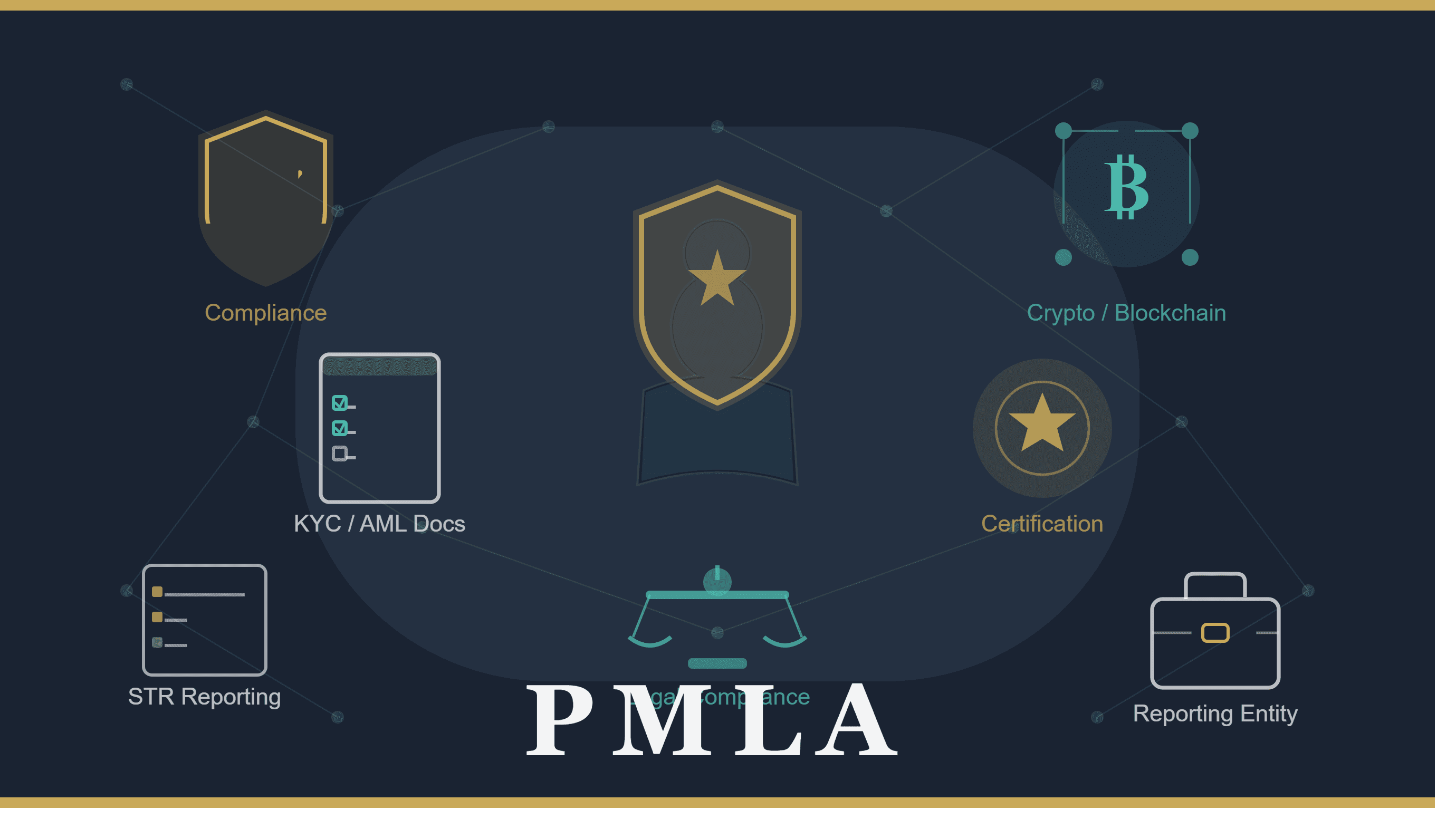
India's regulatory approach towards cryptocurrency businesses has undergone a significant transformation over the last two years. What was once perceived by many offshore crypto exchanges as a jurisdiction with limited enforcement has now become one of the most active markets in enforcing anti-money laundering obligations against Virtual Asset Service Providers (VASPs).
The enforcement actions initiated by the Financial Intelligence Unit–India (FIU-IND) against major global exchanges such as Binance and Bybit have fundamentally altered the compliance landscape. These actions demonstrated that cryptocurrency businesses servicing Indian users cannot operate outside India's anti-money laundering framework, irrespective of where they are incorporated or headquartered.
At the centre of this compliance framework is a role that many crypto businesses previously overlooked the Principal Officer. Under India's Prevention of Money Laundering Act, 2002 (PMLA) and the Prevention of Money-laundering (Maintenance of Records) Rules, 2005 (PML Rules), the Principal Officer serves as the key individual responsible for ensuring that an organization complies with its anti-money laundering obligations.
For crypto exchanges and VASPs, understanding the role of the Principal Officer is no longer merely a compliance exercise; it is a business necessity.
Who Is a Principal Officer Under PMLA?
The Principal Officer is a statutory appointment mandated under the PMLA and the PML Rules. Every reporting entity is required to designate a Principal Officer who acts as the central point of contact between the organization and FIU-IND.
For a VASP, the Principal Officer bears primary responsibility for ensuring compliance with anti-money laundering and counter-terrorist financing obligations. The role is not merely administrative. It involves oversight of compliance systems, monitoring of transactions, reporting of suspicious activities, interaction with regulators, and ensuring that the organization's AML framework remains effective.
Given the nature of virtual assets and the heightened scrutiny surrounding crypto transactions globally, regulators increasingly expect Principal Officers to possess both regulatory knowledge and a practical understanding of digital asset ecosystems.
Key Roles and Responsibilities of the Principal Officer
1. Regulatory Compliance and Reporting
One of the Principal Officer's most critical responsibilities is ensuring compliance with reporting obligations under the PMLA.
The Principal Officer serves as the designated liaison with FIU-IND and is responsible for ensuring that all statutory reports are submitted accurately and within prescribed timelines. This includes furnishing monthly information where required, maintaining copies of reports, and ensuring that suspicious transaction reports (STRs) are filed whenever suspicious activity is detected.
The role also requires ensuring compliance with the record-maintenance obligations prescribed under the PML Rules. Inadequate record-keeping has repeatedly been cited by regulators as a serious compliance deficiency.
2. Oversight of the AML Framework
The Principal Officer is expected to oversee the design, implementation, and continuous enhancement of the organization's AML programme. This includes ensuring robust customer due diligence and Know Your Customer (KYC) procedures, transaction monitoring mechanisms, sanctions screening processes, and risk-based controls across all products and services.
For crypto businesses, this responsibility is particularly significant because virtual asset transactions often involve cross-border transfers, pseudonymous wallets, and rapidly evolving money laundering typologies.
The Principal Officer must therefore ensure that transaction monitoring systems are capable of identifying unusual or suspicious activity and that internal controls remain proportionate to the risks faced by the organization.
3. Risk Assessment and Management
Modern AML compliance extends beyond reporting obligations and increasingly focuses on risk management. The Principal Officer is expected to play a leading role in identifying and assessing money laundering and terrorist financing risks associated with customers, products, geographies, and delivery channels. This includes monitoring emerging threats in both domestic and international virtual asset markets, evaluating new business initiatives before launch, and ensuring that appropriate safeguards are implemented where elevated risks are identified. As crypto products become increasingly sophisticated, regulators expect Principal Officers to proactively anticipate risks rather than merely respond to regulatory concerns after they arise.
4. Governance and Board Reporting
The Principal Officer also functions as an important governance bridge between operational compliance teams and senior management. Regular reporting to the Board of Directors or relevant Board Committees is essential.
5. Building a Culture of Compliance
Regulators increasingly evaluate not only policies but also the compliance culture within organizations. The Principal Officer therefore plays a vital role in designing employee awareness programmes, conducting AML training, and ensuring that staff understand money laundering red flags relevant to digital asset transactions.
The Binance Enforcement Action
The action against Binance marked one of the most significant enforcement developments in India's cryptocurrency sector.
In January 2024, FIU-IND issued show-cause notices to several offshore cryptocurrency exchanges and requested the Ministry of Electronics and Information Technology to block access to their websites for operating in India without complying with PMLA obligations. Binance was among the exchanges identified by FIU-IND for non-compliance. Despite providing services to Indian users, the exchange had not fulfilled the requirements applicable to reporting entities under Indian law.
Subsequently, FIU-IND imposed a monetary penalty of approximately ₹18.82 crore under Section 13 of the PMLA.
The violations included:
Failure to maintain records of transactions as required under Section 12(1) of the PMLA read with Rule 7(1) of the PML Rules;
Failure to report suspicious transactions as required under Section 12(1) read with Rules 3(1)(D) and 7(3) of the PML Rules; and
Failure to designate and furnish information regarding statutorily required compliance personnel, including the Principal Officer, under Rule 8(2) of the PML Rules.
The inclusion of the Principal Officer-related violation is particularly noteworthy. It underscored FIU-IND's position that the appointment and disclosure of key compliance personnel is not a procedural formality but a substantive regulatory obligation.
The Bybit Enforcement Action
The Bybit case further reinforced the message delivered through the Binance proceedings. FIU-IND initiated proceedings against Bybit under Section 13 of the PMLA for alleged failures to comply with obligations applicable to reporting entities. The regulator ultimately imposed a penalty of approximately ₹9.27 crore (USD 1.05 million) and directed measures that resulted in restrictions on Bybit's operations in India until compliance deficiencies were addressed.
The violations involved multiple contraventions of Section 12 of the PMLA and various provisions of the PML Rules relating to reporting, record maintenance, and compliance infrastructure. Unlike many historical enforcement actions where penalties were imposed after prolonged proceedings, the Bybit matter demonstrated the increasing willingness of Indian regulators to take swift and visible action against crypto businesses operating outside the regulatory framework.
Following the enforcement action, Bybit paid the penalty, completed the registration process with FIU-IND, and gradually restored services for Indian users.
Key Lessons for Crypto Exchanges and VASPs
The enforcement actions against Binance and Bybit make one thing abundantly clear: compliance with India's anti-money laundering framework is no longer optional for crypto businesses serving Indian users. VASPs must register with FIU-IND, appoint and disclose a qualified Principal Officer, implement robust KYC and customer due diligence procedures, maintain effective transaction monitoring systems, and ensure timely reporting of suspicious transactions and regulatory information. The cases also demonstrate that offshore incorporation, global scale, or international reputation do not shield businesses from Indian regulatory obligations. Regulators are increasingly focused not only on technical compliance but also on accountability, governance, and the presence of responsible compliance personnel. For crypto exchanges and VASPs, building a strong AML compliance framework is now a fundamental prerequisite for sustainable operations in the Indian market.
Conclusion
The era of regulatory uncertainty for cryptocurrency businesses in India is rapidly giving way to an era of active enforcement and accountability. The actions against Binance and Bybit have demonstrated that India's anti-money laundering framework applies with full force to virtual asset businesses servicing Indian users.
In this environment, the Principal Officer has emerged as one of the most important positions within a crypto organization's compliance structure. The role extends far beyond regulatory filings and encompasses governance, risk management, transaction monitoring, regulatory engagement, and organizational compliance culture.
For crypto exchanges and VASPs, the message from regulators is unmistakable. PMLA compliance is not an ancillary business function it is a core operational requirement. Appointing a competent Principal Officer, establishing robust AML controls, maintaining effective reporting systems, and engaging proactively with regulatory obligations are no longer best practices. They are essential prerequisites for participating in India's rapidly evolving digital asset ecosystem.
As India's regulatory framework for virtual assets continues to evolve, crypto exchanges, VASPs, Web3 platforms, and digital asset businesses must adopt a proactive approach to compliance rather than treating it as a reactive exercise. At Fathom Legal, we advise cryptocurrency exchanges, blockchain businesses, fintech companies, and digital asset service providers on PMLA compliance, FIU-IND registration, AML framework development, governance structures, regulatory risk assessments, and cross-border compliance strategies. As regulatory scrutiny of the sector intensifies, businesses that invest in strong compliance foundations today will be best positioned to build trust with regulators, investors, banking partners, and users in the years ahead.